
How to Read a Lighthouse Flash Pattern
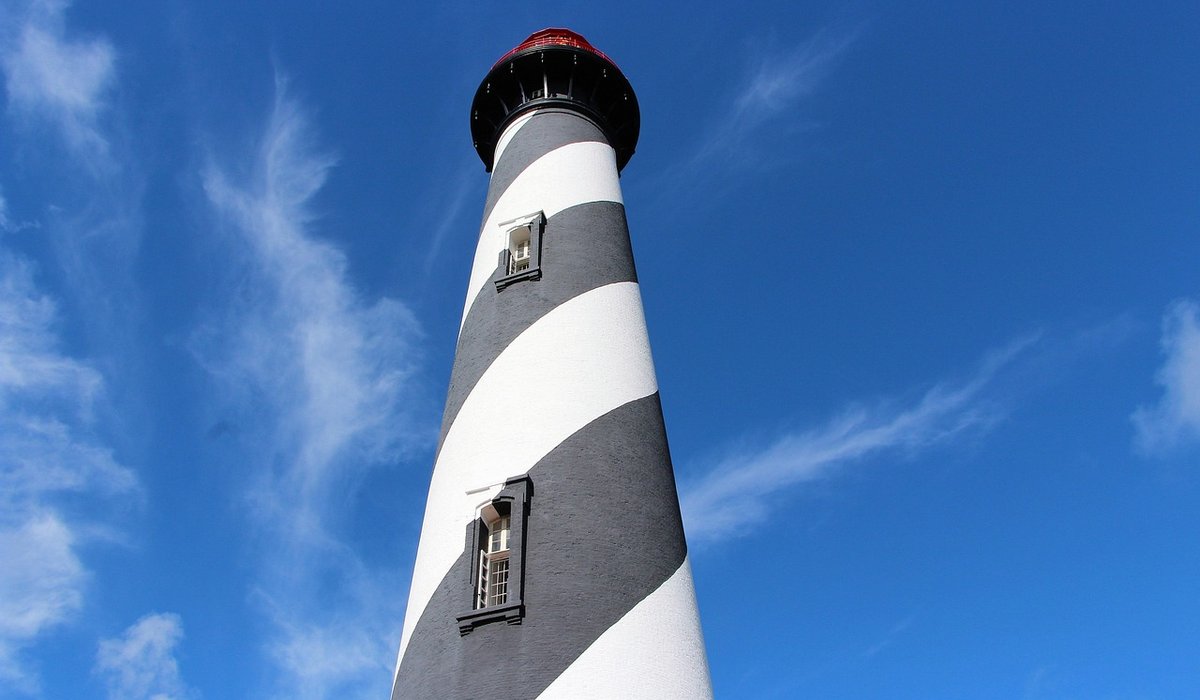
Standing on a cliff path at dusk, you see a light begin to flash across the water. It might be a single bright pulse, or a staccato group of three, followed by a long pause. To a casual observer it is simply a pretty sight. To a mariner – or to you, with a little knowledge – it is a name, a position, and a promise of safe passage. Every lighthouse and major navigation mark around the British coast has its own distinct flash pattern, known as its character. Learning to read these patterns is one of the most rewarding skills for any coastal traveller.
The Language of Light: Flashes, Eclipses and Periods
A lighthouse flash pattern is built from three simple elements: the flash, the eclipse, and the period. A flash is the burst of light you see. An eclipse is the darkness in between. The period is the time from the start of one flash – or one group of flashes – to the start of the next. For example, a light that flashes once every ten seconds has a period of ten seconds. The duration of the flash itself is usually short, often less than two seconds, while the eclipse makes up the rest of the period.
To read a pattern, you need to time it. A watch with a second hand is ideal, though you can count seconds steadily in your head. Watch the light for at least three full periods. Note how many flashes appear in each group, and how long the whole cycle takes. The pattern will repeat exactly, night after night, year after year. That reliability is what makes it useful.
Decoding the Abbreviations on a Chart
Nautical almanacs and charts use a shorthand to describe each light. The most common abbreviation is Fl for flashing. A single flash is shown as Fl, with the period in seconds. A group of flashes is shown as Fl(2), Fl(3), Fl(4), and so on. Other characters include LFl (long flashing, where the flash lasts longer than two seconds), Oc (occulting, where the light is on longer than it is off), and Iso (isophase, with equal on and off times). Quick lights are marked Q (50–79 flashes per minute), VQ (very quick, 80–159), or UQ (ultra quick, 160 or more). Morse code lights are shown as Mo followed by a letter.
Colours are equally important. W means white, R red, G green, and Y yellow. White is by far the most common for major landfall lights. So a chart entry of Fl(3) W 15s tells you to expect three white flashes every fifteen seconds. A single flash would be Fl W 5s. The number in brackets is always the number of flashes in the group.
- Fl – flashing: single flash, period given
- Fl(2) – group of two flashes
- LFl – long flash (lasting more than two seconds)
- Oc – occulting: light on longer than off
- Iso – isophase: equal light and dark
- Q – quick: 50–79 flashes per minute
- Mo – Morse code letter
Group Flashing: The British Coast's Favourite Pattern
Most UK lighthouses use group flashing because it allows many lights to share the same colour and period without confusion. A group of two flashes is very different from a group of three, four, or five. Composite groups, such as Fl(2+1), combine a group of two with a single flash. For instance, a light might show two flashes, a short pause, one flash, then a long pause, repeating every twenty seconds. This gives even more unique signatures.
Consider two famous examples. On the Yorkshire coast, a prominent headland light shows a group of four white flashes. On the Dorset coast, another well-known light also shows four flashes, but with a different period. If you only counted the number of flashes, you might confuse them. But by timing the full period – say, fifteen seconds versus twenty seconds – you can tell them apart instantly. Always note both the group number and the period.
When you are walking a coastal path at night, you might see several lights at once. Count the flashes in each group, then time the cycle for each one. Write them down. Compare with your almanac. If the pattern matches, you know exactly which light you are looking at, and therefore roughly where you are on the coast.
Quick, Very Quick and Morse Lights
Quick and very quick lights flash so rapidly that they appear almost steady. They are common on buoys and at harbour entrances, often marking safe channels. A quick light might flash sixty times a minute – a rapid stutter. Very quick is faster still. These are usually lateral marks: red to port, green to starboard. But some lighthouses also use quick rhythms where a short-range, highly distinctive signal is needed.
Morse code lights are rare but delightful. They show a letter in Morse, such as A (dot-dash) or U (dot-dot-dash). The flashes are long and short, with clear gaps. For example, a light showing Mo(A) W 10s flashes dot-dash every ten seconds. You can decode it if you know Morse, or simply learn the rhythm as a unique signature. These are mostly found on offshore rocks or specific navigation marks.
Quick lights can be hard to count individually. Instead of trying to count every flash, time the period between the start of one group and the next. The pattern is still perfectly regular. With practice, you will recognise the difference between a quick single flash and a very quick group.
Putting It into Practice on a Night Walk
You do not need a boat to enjoy this skill. Many coastal paths offer clear views of multiple lighthouses. Go on a clear, dark night, away from streetlights. Let your eyes adjust for twenty minutes. Use a red-light torch to check your chart – white light ruins night vision. Take a notebook and a watch with a second hand, or use a phone timer with the screen dimmed.
- Stand still and find a stable position.
- Pick one light. Watch for at least three full periods to confirm the pattern.
- Note the colour – white, red, or green. Red often indicates a sector warning.
- Check the period: is it 5s, 10s, 15s, or 20s? Count seconds carefully.
- Compare with your almanac or chart. If it matches, you have identified the light.
Some lights have sectors: a white light that turns red if you stray into dangerous water. These sectors are shown on charts as coloured arcs. When you see a red flash, you know you are off course. Even from land, you can see these changes if you move along the coast. Finally, remember that many UK lighthouses are now automated, but their flash patterns remain unchanged. They are living heritage. By learning to read them, you join generations of mariners who navigated by these rhythms. So next time you see a flash on the horizon, do not just admire it – decode it.

4 Comments